
If someone you know is recovering from a stroke or a head injury, you may wonder what role music can play in rehabilitation. A large review found benefits in several areas such as walking, arm function and speech, but not in overall quality of life. It also covers structured, goal-directed programmes, which are quite different from a relaxing sound bath.
A research team published a systematic review and meta-analysis in Frontiers in Integrative Neuroscience on 20 February 2026. They screened 868 publications from six databases. In total, 90 studies were included in the review, and 41 of these contained data that could be combined in a meta-analysis. The protocol was registered, and the team assessed study quality with a standard appraisal tool.
The people studied were adults with acquired brain injury, meaning damage after birth. This included stroke and traumatic brain injury, plus other causes such as aneurysm, tumour or infection. Of the 90 studies, 15 focused on traumatic brain injury and 59 on other causes. Most studies were small, and only a few enrolled more than 50 people.
The designs varied: randomised trials, case-control studies, case reports, brain-imaging studies and others. The music interventions also varied. They included playing instruments, structured listening and improvisation, usually as part of a planned rehabilitation programme rather than casual listening.
In the combined analysis, music-based programmes were linked to better results in several areas:
Two overall measures did not show a clear effect. Pooled results for quality of life, based on 5 studies, were not statistically significant, and the authors call the evidence inconclusive. Pooled results for global improvement, also 5 studies, showed essentially no difference.
So the review reports gains in specific functions, but not in how people rated their overall recovery or life.
The title of the paper speaks of positive therapeutic effects, but the numbers deserve a careful read. The authors state that methodological differences, small samples and short programmes limit how far the results can be generalised. Other points to keep in mind:
Another caution is that people with brain injury differ a lot. The type of injury, how long ago it happened, age and other conditions all affect recovery. The review pooled average results, which may not describe an individual.
It also helps to keep the types of sound activity apart. Rehabilitation music programmes are structured and goal-directed, and are often delivered by trained music therapists or rehabilitation teams as part of a wider plan, which may include physiotherapy, speech pathology and occupational therapy. A sound bath, a singing bowl session or ordinary music listening is a different thing, and this review does not make claims about them. Nor does it suggest music should replace other rehabilitation.
Source: Systematic review and meta-analysis reveal positive therapeutic effects of music in brain damage rehabilitation DOI: 10.3389/fnint.2026.1720473
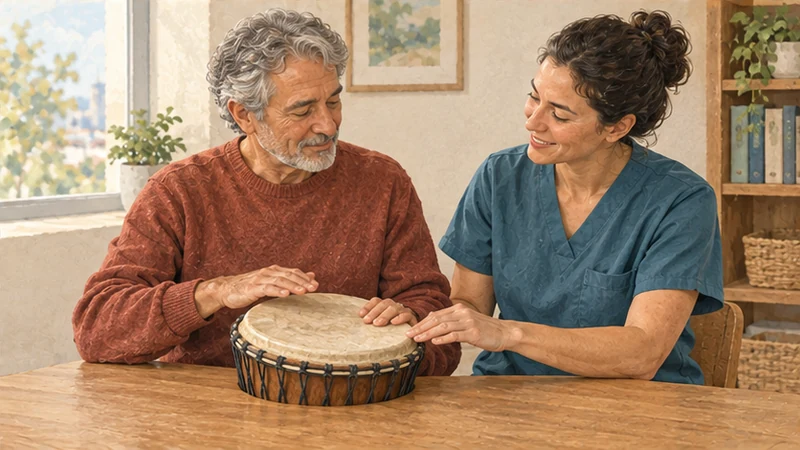
AI-generated editorial illustration. The scene is fictional and does not depict a study participant or demonstrate treatment effectiveness. This article summarises published research in our own words and is general information, not personal health advice.
Comments are disabled